
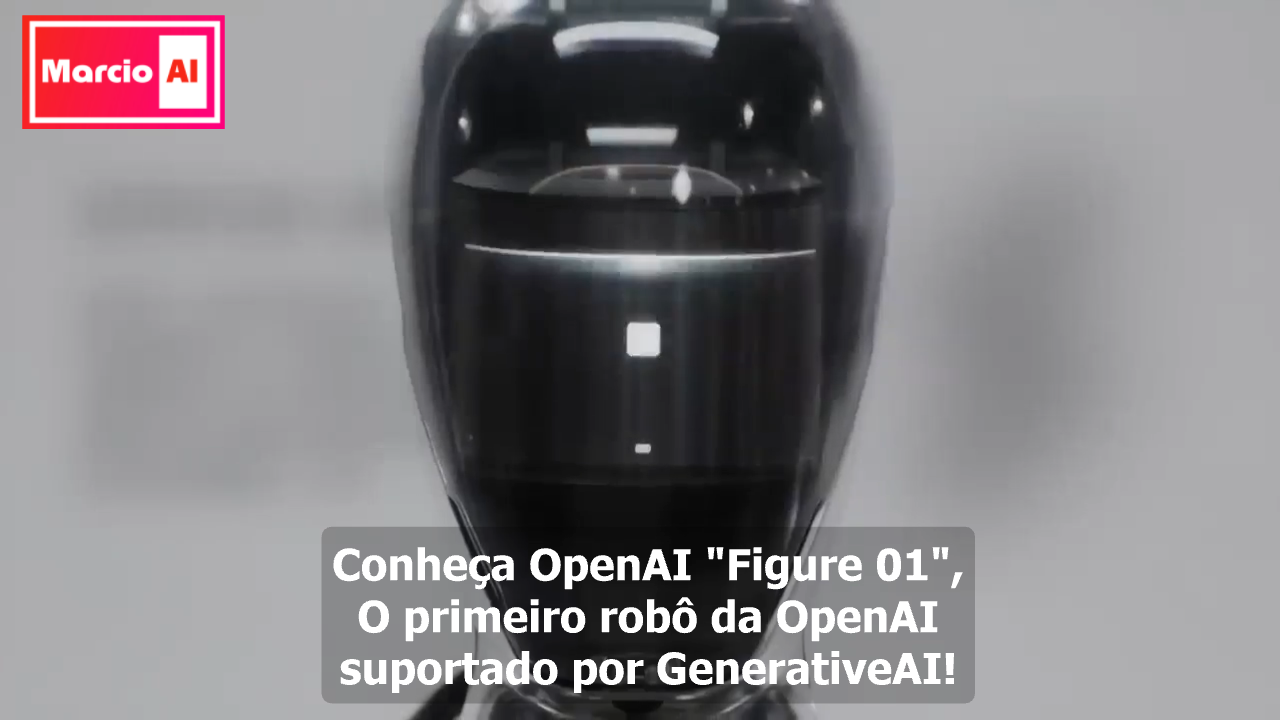
Meet “Figure 01”

Figure 01 humanoid robot during a demonstration

Meet Figure 01: a milestone in robotics driven by OpenAI’s generative artificial intelligence. It has arrived to rival Boston Dynamics’ Atlas and Elon Musk’s Optimus, the “TeslaBot.”

This autonomous humanoid promises to transform manufacturing, logistics, and retail by combining human dexterity with advanced AI.

Backed by investments from giants like Bezos, Microsoft, and Nvidia, and valued at $2.6 billion, Figure 01 is a vivid example of the future being built today.

It not only walks and performs tasks but learns and improves over time. With the ability to work in dangerous or dull conditions, it represents a new era in automation.

The synergy between #Figure‘s expertise in robotic hardware and OpenAI’s language models has the potential to lead us to fluid robot-human interactions, marking OpenAI’s strategic expansion into the field of robotics.

For more visit https://www.figure.ai/

#AI #Robotics #Innovation #OpenAI #Figure01 #MarcioAI #TechForGood #TechnologyForGood

See for yourselves:


Read also: Conheça o Figure 01 (Portuguese version).

AI strategy, architecture and governance consulting: Marcio.AI.

What happened next

This post is from March 2024. Two things changed since then, and both are worth recording.

The first is the split from OpenAI. In February 2025 Figure ended the agreement with OpenAI and moved to in house models, presented under the name Helix. The company justified the decision with an internal breakthrough in robot intelligence. The partnership that framed the original announcement lasted less than a year.

The second is the move from lab to factory floor. For eleven months in 2025 the Figure 02 worked at the BMW plant in Spartanburg, South Carolina, supporting production of more than 30,000 BMW X3 units. The task was inserting sheet metal parts in the body shop, work that demands speed, precision and physical effort.

In June 2026 BMW announced the deployment of Figure 03 at the same plant, this time in logistics. The robot picks components from larger containers and arranges them on a sequencing cart, which then moves to assembly in an automated flow. Figure 03 brought hands with tactile sensors and palm cameras, wireless charging, speech communication and softer components for safety.

What this means for decision makers

The point that matters for anyone planning operations is not that the robot walks. It is that the robot stays. Eleven months on a real production line, with volume measured in tens of thousands of vehicles, is a different kind of data from any demo video.

The change of intelligence supplier says something else. In robotics the language model is a component, not the product. Whoever controls the hardware and the operating data holds more leverage than it seemed in 2024.

Rolar para cima